Skull Jewelry
Gothic Skull Jewelry: How to Choose and Style It
Choose gothic skull jewelry by deciding how prominent you want the motif to be, then compare the base metal, finish, dimensions, weight, closure, and care requirements. One well-scaled piece is usually easier to wear than several oversized designs competing at once.
Quick take
Check construction before symbolism
A strong design still needs clear metal disclosure, useful dimensions, secure hardware, and a size that works with your clothing and daily routine.
Buying framework
Start with the type of piece you will actually wear
A pendant is easy to layer over a plain shirt, a ring keeps the motif compact, earrings bring the design closer to the face, and a bracelet can repeat the hardware on a jacket or boots. Choose the category first, then the skull style. This prevents a dramatic photograph from distracting you from practical questions such as weight, dimensions, chain length, clasp type, or ring size.
For a first piece, look for a medium-scale design with enough detail to read clearly but not so much projection that it catches on clothing. Larger pieces can work well as deliberate focal points when the rest of the outfit is simple.
Understand the metal description
Product language should identify what the piece is made from. Sterling silver is an alloy that is typically marked 925 when represented as 92.5 percent silver; a silver-tone or silver-plated item is different from solid sterling. Stainless steel, brass, bronze, and base-metal alloys have different color, weight, corrosion behavior, and care needs. Gold-colored does not necessarily mean solid gold.
| Listing term | What to verify | Practical consideration |
|---|---|---|
| Sterling silver or 925 | Metal disclosure and maker/seller information | Can tarnish and may need periodic polishing |
| Stainless steel | Grade if supplied, finish, and coating disclosure | Often chosen for a hard-wearing, cool-toned look |
| Brass or bronze | Whether the surface is coated or plated | May develop patina and can change surface color |
| Plated or tone | Base metal, plating material, and care limits | Surface finish can wear with friction and chemicals |
If a listing uses vague terms such as “premium metal” without naming the material, ask before buying. The U.S. Federal Trade Commission provides consumer guidance on representations for precious-metal jewelry.
Choose the skull design language
Anatomical or realistic
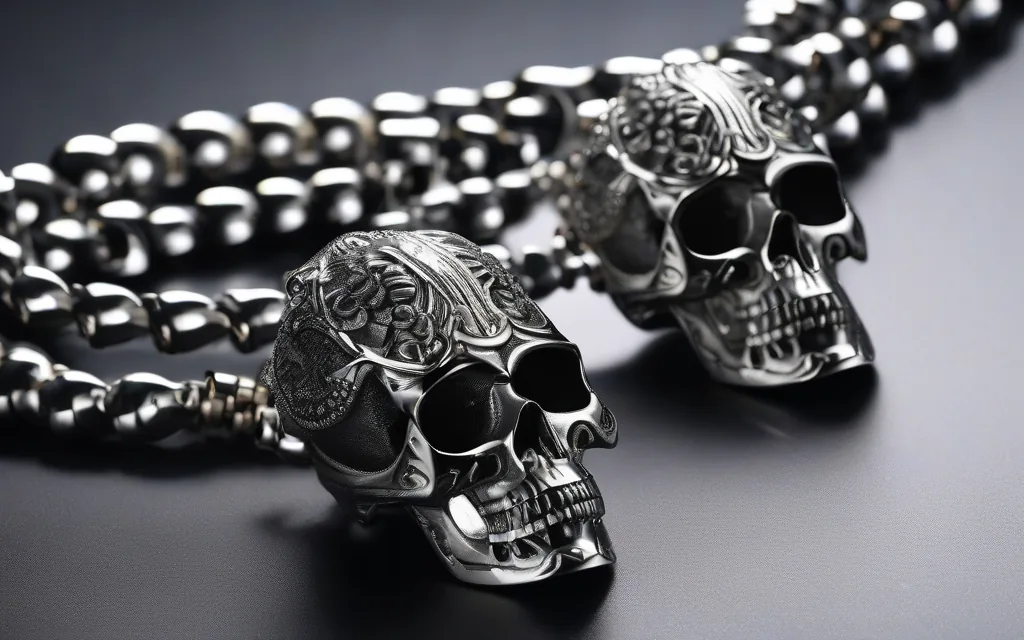
Detailed contours and darker recesses create a sculptural look. These pieces tend to read as the focal point.
Ornate gothic
Scrollwork, crosses, floral details, crowns, or architectural patterns create a decorative, layered effect.
Minimal or geometric
Simplified skull shapes are easier to combine with workwear, tailoring, or everyday basics.
Stone-set or enamel
Color adds contrast, but settings, coatings, and glued components may require more careful cleaning.
Symbols do not have one universal meaning. A skull can be worn as a reminder of mortality, a sign of defiance, a visual connection to music or motorcycle culture, or simply as graphic art. Avoid assigning a fixed meaning to someone else’s jewelry.
Check scale, weight, and hardware
Photographs can make a pendant, ring, or charm look larger than it is. Look for measurements in inches or millimeters and compare them with a piece you own. For pendants, check both pendant dimensions and chain length. For earrings, review the weight per earring and the post or hook style. For bracelets and necklaces, inspect the clasp type and whether the connecting rings appear closed and secure.
Raised teeth, horns, wings, or sharp-edged ornament can catch knitwear, lace, hair, or gloves. A lower-profile piece may suit daily wear better, while a larger sculptural design can be reserved for occasions where snagging is less likely.
Style gothic skull jewelry with a clear hierarchy
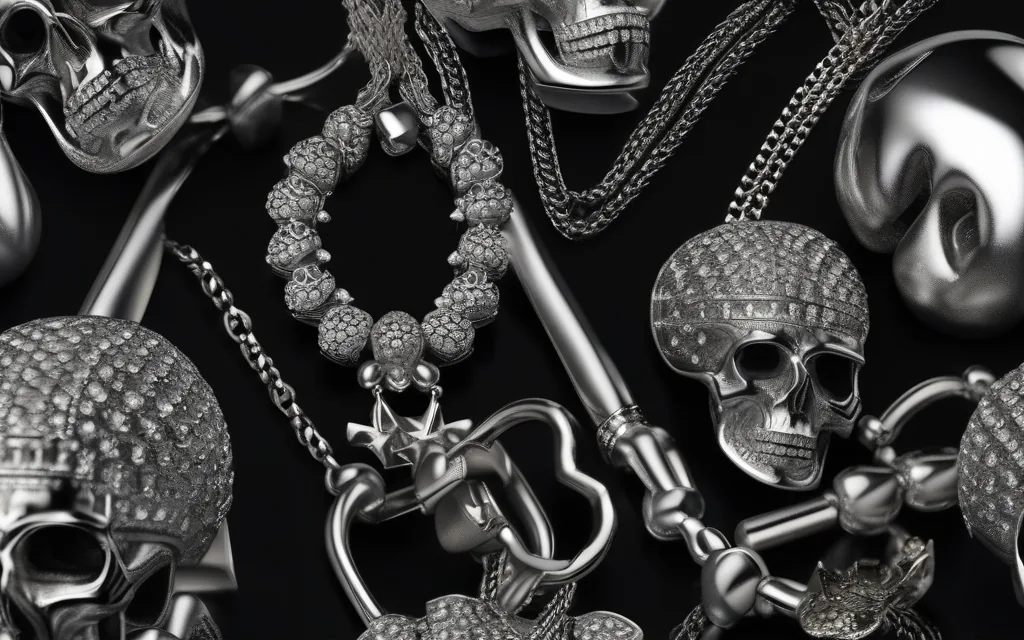
Against a plain black, charcoal, white, or deep burgundy top, a silver-tone skull pendant becomes easy to read. With patterned clothing, use a smaller piece or repeat only one material from the outfit, such as silver hardware or black enamel. An open collar, scoop neck, or simple crew neck gives a pendant a clean background.
If you wear several pieces, vary their scale. A medium pendant can pair with a smaller ring or restrained earrings. Avoid stacking several large skulls in the same visual area unless maximalism is the deliberate goal. The broader gothic skull style hub offers a useful direction, while skull fashion helps place jewelry within a complete outfit.
Care for the material and finish you own
There is no single safe cleaning method for every gothic piece. Gemstones, glued elements, plating, oxidized recesses, enamel, and intentionally antiqued finishes can react differently. Follow the maker’s instructions. Remove jewelry before swimming or using strong household chemicals, and store pieces separately to reduce scratching and tangling.
For sterling silver, use a suitable polishing cloth gently and avoid removing intentional darkening from recessed areas. For plated pieces, abrasive polishing can shorten the life of the surface. The Jewelers of America recommends considering the specific gems, settings, and construction before cleaning jewelry.
Common questions
Is gothic skull jewelry only for formal gothic outfits?
No. A small skull ring, pendant, or stud can work with denim, a plain tee, tailoring, or biker-inspired clothing. Scale and finish usually matter more than the label placed on the style.
What should a good product listing show?
Look for named materials, dimensions, weight where relevant, clear close-ups, clasp or setting details, care instructions, return terms, and a realistic description of plating or coating.
Can sterling silver skull jewelry turn dark?
Sterling silver can tarnish through normal chemical reactions at the surface. That does not automatically mean the item is defective. Gentle, material-appropriate care may restore brightness, but intentional oxidation in the skull’s details should be preserved.
Sources and limitations
Material and care guidance was checked against the U.S. Federal Trade Commission Jewelry Guides in 16 CFR Part 23 and the Jewelers of America’s jewelry repair and care guidance. This article does not claim hands-on testing of a particular brand, metal alloy, stone, or coating.
Read next
Compare skull jewelry families
Use the main hubs to compare necklaces, rings, accessories, and styling directions before choosing a focal piece.